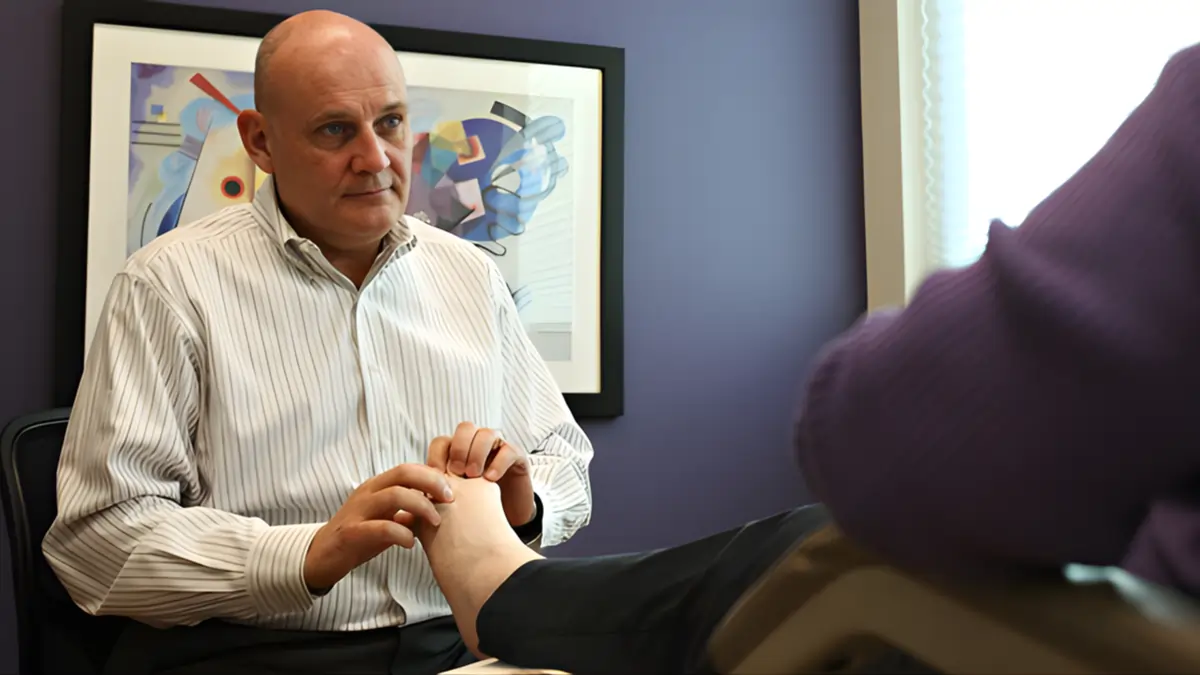
Kansas City’s expert podiatric care providers have compiled a list of four common causes of heel pain in adults and their typical cause or diagnosis. Remember: Scheduling an appointment with an an expert podiatrist is the most efficient way to address your pain.
Plantar Fasciitis
Plantar fasciitis is one of the most common causes of heel pain in adults. This injury is a result of strain and small tears to the plantar fascia ligament, usually from excessive walking or running. As the largest ligament in the body, the plantar fascia can cause moderate to severe pain radiating throughout the entire sole. Symptoms are generally worse in the mornings; when applying pressure to the inflamed area, you may experience intense pain. A series of flexion stretches and massage can eliminate some of the inflammation, but you still may be unable to walk on hard surfaces without discomfort.
Achilles Tendonitis
The Achilles tendon is the largest tendon in your body, connecting your heel bone to your calf muscles. This tendon undergoes a great deal of stress when running and jumping, which may ultimately lead to tendonitis. Tendonitis of the Achilles is the inflammation of the tendon. This is usually a result of repeated stress on the area, rather than an isolated injury. If you are not a consistent runner, and you decide to randomly start running five miles per day with minimal stretching, then you are prone to developing Achilles tendonitis. Pain can be moderate to severe, radiating up the back of your heel and causing swelling of the tendon itself. You will often notice the pain in the mornings, after strenuous exercise, or during daily walks.
Heel Bursitis
Bursitis of the heel is the result of the Bursa sacs and applying pressure on the back of the heel bone. These Bursa sacs are responsible for lubricating and cushioning the tendons and muscles as they pass over the bone. Repeated walking, running, or jumping, can cause the bursa sacs to inflame. Heel bursitis is located beneath the Achilles tendon and shares similar characteristics with Achilles tendonitis, but is regarded as less severe. Pain may be present in the back and bottom of the heel. Experiencing pain while standing on your tiptoes, the presence of warm, red skin, and pain while bending your ankle upwards, are all usual symptoms of Heel Bursitis.
Stress Fracture of the Foot or Heel
A stress fracture is a small crack in the heel bone, most commonly caused by overuse. If your new job requires more strenuous movements, or if you’ve taken up a new workout regime, then you are prone to developing stress fractures. When you expose your heels to new activity, without proper conditioning, then you run the risk of your bones cracking under newfound pressure. Pain may range from mild to severe and can be further complicated by swelling around the are. Repetitive stress on your heels after the crack can hinder the ability to properly heal, or heal the bone in an abnormal position, causing long-term pain.
The aforementioned conditions are the most common diagnosis of heel pain. Informing yourself of the symptoms and conditions can help you eliminate pain triggers, and mitigate long-term damage before your doctor can properly examine your heels. Schedule an appointment with Kansas City Foot Specialists today, or, give us a call to schedule!